
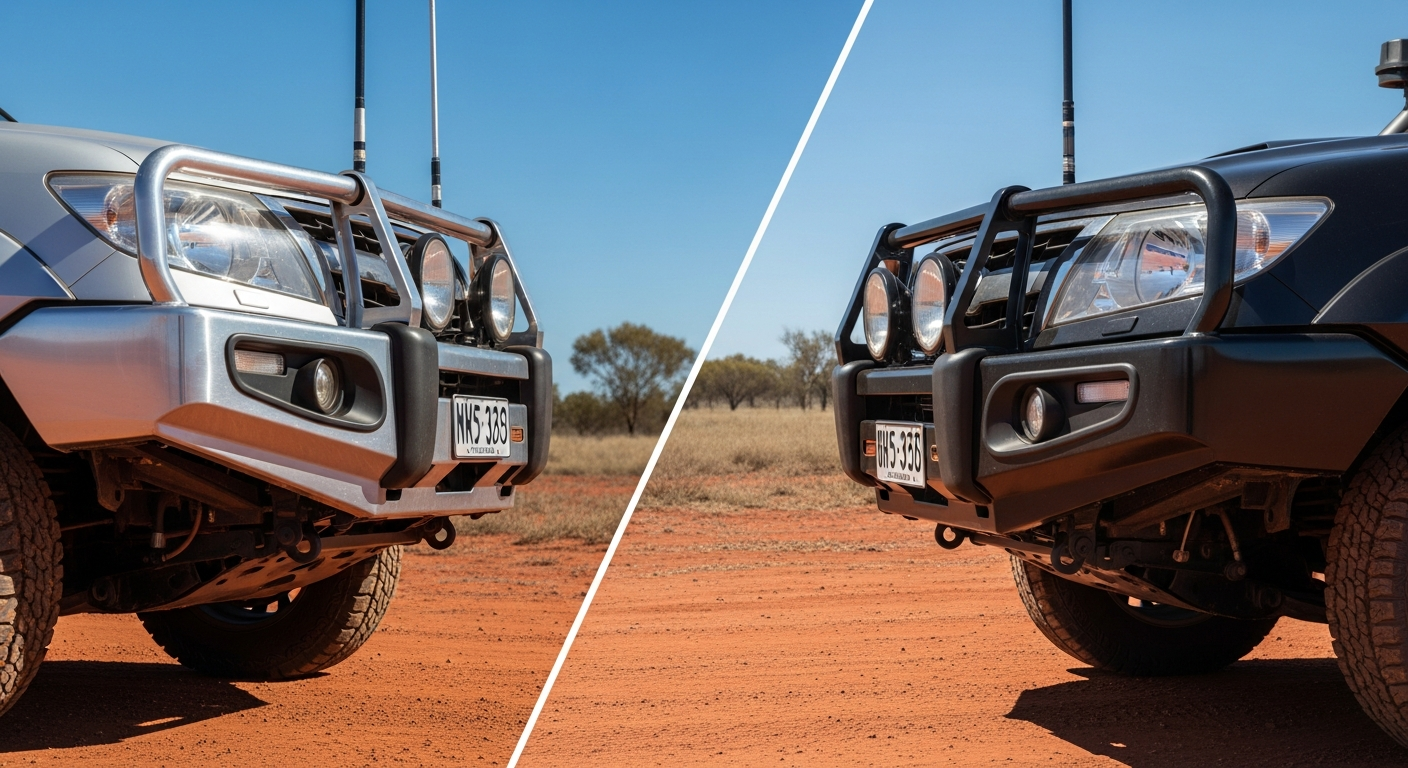
Australia’s driving conditions are among the toughest in the world. From long-distance highway travel and remote outback roads to off-road tracks filled with rocks, mud, and wildlife, owning a 4×4 often means preparing for unpredictable situations. One of the most important upgrades you can make to protect your vehicle and improve safety is fitting the right bull bar.
A bull bar is not just an aesthetic accessory. It plays a critical role in protecting your vehicle, supporting off-road equipment, and ensuring compliance with Australian road laws. Choosing the wrong bull bar can result in safety risks, legal issues, and insurance complications. This guide explains everything you need to know to choose the right bull bar for your 4×4 in Australia.
What Is a Bull Bar and Why Do You Need One?
A bull bar is a heavy-duty protective structure mounted to the front of a vehicle. Its main purpose is to protect vital components such as the radiator, headlights, grille, and engine bay during collisions or impacts.
In Australia, bull bars are particularly important because of:
- High risk of animal strikes, especially kangaroos and livestock
- Long rural highways with limited emergency access
- Harsh off-road terrain including sand, mud, and rocky tracks
- Remote touring where vehicle damage can be dangerous
A quality bull bar helps absorb impact energy, reduce repair costs, and keep your vehicle drivable after minor to moderate collisions.
ADR Approval: A Non-Negotiable Requirement
When choosing a bull bar in Australia, ADR approval should always be your first consideration.
What Is ADR Approval?
ADR stands for Australian Design Rules. These are national standards that regulate vehicle safety, performance, and design. An ADR-approved bull bar is tested to ensure it meets strict safety requirements.
ADR-approved bull bars are designed to:
- Work correctly with factory airbag systems
- Avoid interference with crash sensors
- Meet pedestrian safety regulations
- Comply with Australian road laws
Why ADR Approval Matters
Installing a non-ADR-approved bull bar can cause serious issues, including:
- Airbags failing to deploy correctly
- Increased risk of injury during an accident
- Vehicle being deemed illegal for road use
- Insurance claims being rejected
Many insurance companies inspect vehicle modifications after accidents. If your bull bar does not meet ADR standards, your insurance coverage may be void. For this reason alone, ADR approval should never be overlooked.
Choosing a Vehicle-Specific Bull Bar
Modern 4×4 vehicles are equipped with advanced safety and driver-assist technology. This includes:
- Airbags
- Parking sensors
- Forward collision sensors
- Cameras and radar systems
A vehicle-specific bull bar is designed to fit a particular make, model, and year range. This ensures:
- Correct alignment with safety systems
- Proper airbag compatibility
- Cleaner fitment
- Easier installation
For example, a Toyota Hilux bull bar designed for 2015–2020 models may not fit correctly on a 2021 model. Always match the bull bar to your exact vehicle details to avoid safety and fitment issues.
Steel vs Alloy Bull Bars: Which Is Better?
One of the biggest decisions when choosing a bull bar is selecting the right material. The two most common options are steel and alloy.
Steel Bull Bars
Steel bull bars are known for their strength and durability. They are ideal for:
- Off-road driving
- Rural and outback areas
- High animal strike zones
- Vehicles fitted with winches
Advantages of steel bull bars:
- Maximum impact resistance
- Extremely durable
- Better suited for harsh conditions
Disadvantages:
- Heavier weight
- Slight increase in fuel consumption
- Added front-end load
Alloy Bull Bars
Alloy bull bars are lighter and often preferred by drivers who mainly use their vehicle on-road.
Advantages of alloy bull bars:
- Reduced vehicle weight
- Improved fuel efficiency
- Better handling for daily driving
Disadvantages:
- Less impact resistance than steel
- Not ideal for heavy off-road use
Your choice should depend on how you use your 4×4. For touring, off-road travel, and rural driving, steel bull bars are often the better choice. For city driving with occasional off-road use, alloy bull bars may be sufficient.
Accessory Compatibility and Mounting Options
One of the key benefits of installing a bull bar is the ability to mount essential accessories. When choosing a bull bar, consider both your current and future accessory needs.
Common bull bar accessories include:
- LED driving lights or light bars
- Electric winches
- UHF radio antennas
- Rated recovery points
A quality bull bar should be designed to safely support these accessories without affecting vehicle safety systems. If you plan to install a winch, ensure the bull bar is winch-compatible and reinforced accordingly.
Approach Angle and Off-Road Clearance
Approach angle plays a major role in off-road performance. A poorly designed bull bar can reduce clearance and make it harder to tackle obstacles.
When choosing a bull bar, look for:
- High-clearance design
- Tight fitment to the vehicle body
- No unnecessary protrusions
- Improved approach angle
This is especially important for vehicles used on rocky tracks, steep inclines, or sand dunes.
Finish, Durability, and Corrosion Protection
Australian conditions can be harsh on vehicle accessories. Exposure to dust, salt air, moisture, and mud can cause corrosion over time.
High-quality bull bars usually feature:
- Powder-coated finishes
- Anti-corrosion treatments
- UV-resistant coatings
A durable finish not only extends the life of the bull bar but also keeps it looking good for years.
Legal and Insurance Considerations
Beyond ADR approval, it’s important to ensure your bull bar complies with local regulations. Your bull bar should:
- Not obstruct headlights or indicators
- Allow clear visibility of the number plate
- Not extend excessively beyond the vehicle
Always notify your insurance provider after installing a bull bar. This ensures your modification is documented and covered under your policy.
Professional Installation vs DIY Fitting
While some experienced owners choose DIY installation, professional fitting is often recommended.
Professional installation ensures:
- Correct torque settings
- Proper alignment
- Sensor calibration
- Warranty protection
Incorrect installation can lead to vibration, sensor issues, or reduced protection during an impact.
Final Thoughts
Choosing the right bull bar for your 4×4 in Australia is about balancing safety, legality, performance, and intended use. An ADR-approved, vehicle-specific bull bar made from the right material will protect your vehicle and give you confidence on and off the road.
By investing in a quality bull bar, you’re not just upgrading your vehicle — you’re preparing it for Australia’s demanding driving conditions.