
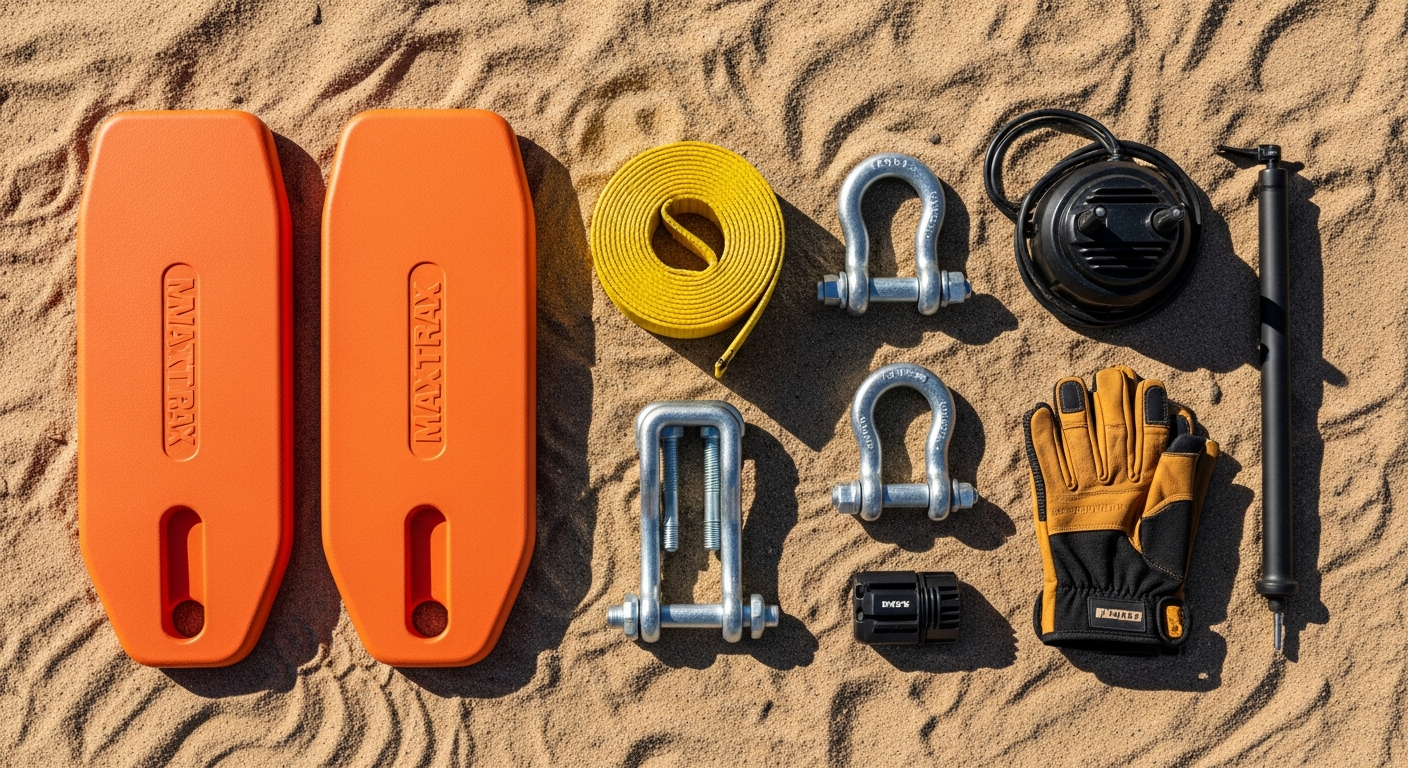
Off-road driving in Australia is an incredible experience, but it comes with risks. Remote tracks, muddy terrain, sand dunes, and rocky trails can easily leave a 4×4 stuck. Whether you’re a beginner or an occasional off-roader, having the right recovery gear is essential for safety, confidence, and self-reliance.
This guide provides a complete 4×4 recovery gear checklist for beginners, explaining each item, why it’s important, and how to use it effectively.
Why Recovery Gear Is Crucial
Even experienced drivers can get stuck in challenging conditions. Recovery gear ensures that:
- You can safely extract your vehicle from mud, sand, or steep inclines.
- You minimize damage to your vehicle during recovery.
- You stay safe in remote areas without immediate assistance.
- You’re legally prepared and compliant for off-road adventures.
Australia’s outback and bush tracks often have limited mobile coverage, making self-recovery essential.
1. Rated Recovery Points
What They Are
Recovery points are reinforced attachment points on your vehicle specifically designed for towing and pulling.
Why They’re Essential
- Safe connection for snatch straps, winches, or tow ropes.
- Prevents damage to the vehicle chassis.
- Rated recovery points are load-tested for reliability.
Tips
- Always check the weight rating of recovery points.
- Avoid using non-rated hooks or chassis parts.
2. Snatch Straps and Kinetic Ropes
What They Do
Snatch straps and kinetic ropes are designed to transfer energy to pull a stuck vehicle out of mud, sand, or other terrain.
Key Points
- Snatch straps: Stretch slightly to provide a pulling force.
- Kinetic ropes: Similar function but often lighter and compact.
Usage Tips
- Use rated shackles to attach straps.
- Maintain a safe distance during recovery to avoid accidents.
- Never use towing ropes designed for road towing—they can snap dangerously.
3. Shackles and D-Shackles
Purpose
Shackles connect snatch straps or kinetic ropes to recovery points securely.
Why They Matter
- Provides a strong, reliable connection.
- Reduces the risk of strap or rope failure.
Tip: Choose bow or D-shackles rated above your vehicle’s weight.
4. Recovery Tracks
What They Are
Recovery tracks (or sand ladders) are sturdy boards designed to provide traction when wheels spin on loose surfaces like sand or mud.
Benefits
- Prevents digging wheels deeper.
- Assists vehicles with low traction in sand, mud, or snow.
- Lightweight and easy to carry on roof racks or bull bars.
Tip: Always secure recovery tracks to avoid rattling during travel.
5. Hi-Lift Jack
A hi-lift jack is a versatile recovery tool.
Uses
- Lifting vehicles to change tyres or place recovery tracks.
- Pulling or winching in combination with rated attachments.
Safety Considerations
- Always use gloves and proper placement.
- Ensure solid ground; avoid soft or uneven surfaces.
6. Gloves and Protective Gear
Recovery operations can be dangerous. Protective gloves prevent injuries from:
- Snapping straps
- Metal shackles
- Sharp edges on vehicles or recovery equipment
Additional gear: Safety glasses, sturdy boots, and high-visibility vests are recommended for roadside or group recovery operations.
7. Winch (Optional but Recommended)
A winch provides self-recovery without assistance.
Key Features
- Electric winches are common for off-road vehicles.
- Ensure winch capacity exceeds your vehicle’s weight.
- Synthetic ropes are lighter and safer than steel cables.
Tip: Learn winch operation and safety before heading off-road.
8. Vehicle Recovery Bag or Storage Box
Keeping recovery gear organized is critical.
Why It Helps
- Prevents damage to straps, ropes, and shackles.
- Easy access in emergencies.
- Keeps vehicle interior or roof rack tidy.
9. Accessories for Enhanced Recovery
Pulley Blocks and Snatch Blocks
- Change pulling direction without repositioning the vehicle.
- Increase pulling power by distributing load.
Tree Trunk Protectors
- Protects trees when using them as anchor points for winching.
- Essential for environmental safety in bushland areas.
Bow Shackles and Soft Shackles
- Used for safe and flexible recovery.
- Soft shackles reduce risk of snapping compared to metal ones.
10. Maintenance and Inspection
Recovery gear must be maintained to be effective:
- Check straps and ropes for fraying or damage.
- Inspect shackles for cracks or bending.
- Test winches and electrical systems regularly.
- Clean recovery tracks and other gear after use.
Regular inspection prevents gear failure during emergencies.
Legal and Safety Considerations in Australia
Australian off-road regulations recommend or require certain recovery gear in some regions. Safety compliance ensures:
- Lower risk of injury during recovery
- Protection for the environment (using tree protectors)
- Avoiding fines or penalties in national parks or bushland areas
Beginner Tips for Using Recovery Gear
- Plan Ahead
- Check terrain and conditions before heading off-road.
- Ensure you have enough recovery gear for your vehicle type.
- Learn How to Use Each Item
- Practice using snatch straps, shackles, and hi-lift jacks.
- Know proper recovery distances and techniques.
- Never Exceed Equipment Limits
- Overloading straps or shackles can cause dangerous failures.
- Work as a Team
- Communication is key if off-roading with others.
- Always keep bystanders at a safe distance during recovery.
Final Thoughts
Off-road adventures are exciting, but preparation is critical. A complete 4×4 recovery gear checklist for beginners ensures you are ready for unexpected situations, improves safety, and enhances confidence. Essential items include rated recovery points, snatch straps, shackles, recovery tracks, hi-lift jacks, gloves, and winches.
By investing in the right recovery gear and learning proper usage, beginners can explore Australia’s diverse off-road terrain safely, efficiently, and responsibly.